GEO Without Shortcuts: Google Confirms Showing Up in AI Is Just Good SEO
Agencies are selling "GEO" as a secret trick. Google's own guide says there are no extra technical requirements: appearing in AI Overviews is good SEO. Here's what to do instead.
D
Dariel Corchado
MD3 Digital Solutions
Lately, plenty of agencies are selling “GEO” as a new, secret technique for showing up in Google’s artificial intelligence summaries: a magic file, a special code, a secret formula. If you got an offer like that, there’s good news: Google has already answered, and the answer is boring in the best way. There’s no trick. Showing up in AI is just continuing to do good SEO.
What Google says, with no middleman
Google published a guide in Google Search Central, “AI features and your website,” on how AI Overviews and AI Mode work for a site owner. The guide says two clear things:
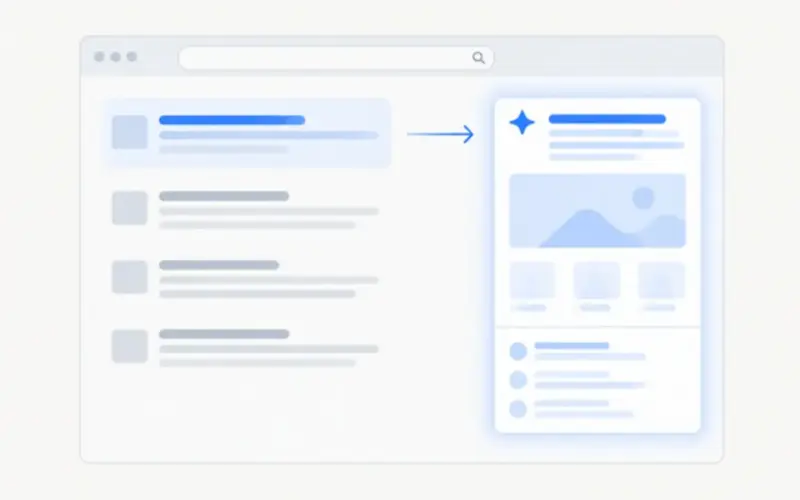
To appear as a supporting link in AI Overviews or AI Mode, a page must be indexed and eligible to be shown with a snippet. The guide adds: “There are no additional technical requirements.”
“While no specific optimization is required for AI Overviews and AI Mode, all SEO fundamentals remain valuable.”
The idea underneath is simple: for Google Search, optimizing for generative AI is optimizing the search experience. It’s still SEO, under a different name.
Google’s John Mueller reinforced this in an interview on October 29, 2026, covered by Search Engine Journal on November 2: technical SEO will remain “very relevant,” and AI systems’ crawling is “another flavor of technical SEO.” Not a new discipline. The same work, with one more reader.
What Google asks for in practice
The guide doesn’t ask for anything exotic. It asks for what good SEO has asked for years: that Google can crawl and index the page, that robots.txt doesn’t block it, and that the important content is in text, not just in images or video. Useful content written for people, not pages built to cover every variation of a question. Internal links, a good page experience, structured data that matches the visible text, and an up-to-date Merchant Center and business profile, with the same details everywhere.
It’s worth understanding “query fan-out”: when a question is long, the AI system splits it into several searches on subtopics and then builds the answer from the results. A page that answers each sub-question clearly has more chances of showing up than a generic one that tries to cover everything superficially. Answering specific questions, one by one, is the strategy.
What you don’t need (even if someone sells it to you)
Here Google’s guide takes apart the business of shortcuts. According to the guide and the analysis Verity Score published on November 6, 2026, you don’t need: llms.txt, because Google Search doesn’t use llms.txt or other AI text files; special schema for generative AI, because there’s no special schema.org markup for that; Markdown versions of your site; content chopped into artificial chunks; or fabricated mentions.
One caveat: this is what Google says about its own search engine. Other systems, like ChatGPT, Perplexity, or Claude, have their own rules, and the guide doesn’t speak for them. Anyone who sells you a single technique for “all AI” is simplifying something Google itself doesn’t simplify.
The myth of the “GEO trick”
The GEO trick sells because it promises what every business owner wants: to show up in AI answers without doing the slow work. But before you pay, ask yourself: if Google says there are no additional requirements, what exactly is the agency selling?
What does work, according to the guide itself, has no mystery: original content based on real experience, your own data, clear answers to questions your customers actually ask, and business details that match everywhere. None of that guarantees you’ll appear: Google says there’s no way to request or guarantee inclusion in an AI summary. Anyone who guarantees you a spot in AI Overviews is promising something Google doesn’t offer.
What to do this week
Check in Search Console that your key pages are indexed and eligible to be shown with a snippet.
Make sure prices, policies, and contact details say the same thing on your site, in your business profile, and in Merchant Center.
Write or update a page that answers a real question from your customers, with the answer in clear, direct text.
Don’t buy files or codes “for AI” until you’ve done the above. If an agency offers you a shortcut, ask them to show you where Google asks for it.
SEO didn’t die with AI: it changed who’s reading. Now your pages are also read by systems that summarize. The work is still the same: clear pages, honest content, and a site Google can read without obstacles.
Want your business to show up when AI answers?
At MD3 Digital Solutions we help businesses get in order what Google asks for: indexable pages, clear content, consistent details, and real measurement of where your site appears. No tricks and no promises Google doesn’t back. Contact us.
Google's Search Console now has a Generative AI Performance report. Here's how to find it, what it measures (and what it doesn't), and how to read it without jargon.
Since late October 2026, Google has been showing the AI Overview for many brand searches where the knowledge panel used to be. Here's what changed and how to check what AI says about your company.
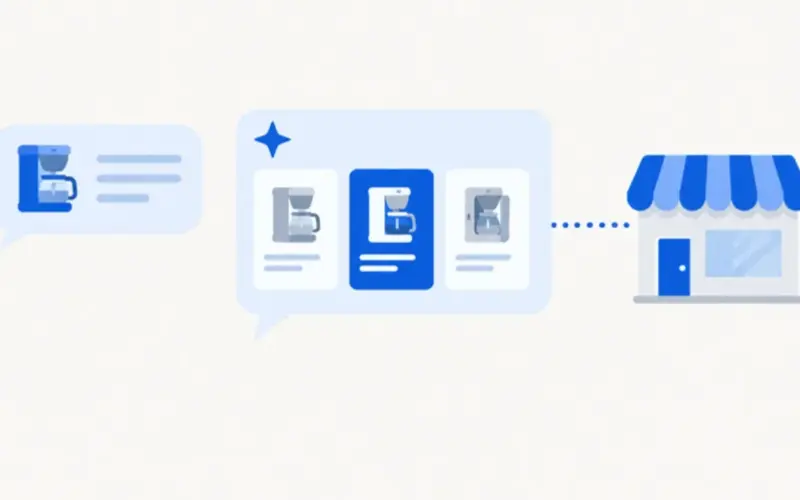
As of November 4, 2026, Microsoft Clarity's Brand Agents can surface products from eligible WooCommerce stores in Copilot, Bing, and MSN. Here's what they are, how to set them up, and what they don't promise.