Many dental plans renew on January 1, so December is when patients with unused benefits look for a dentist. Here's what we learned running year-end Google Ads for a dental practice.
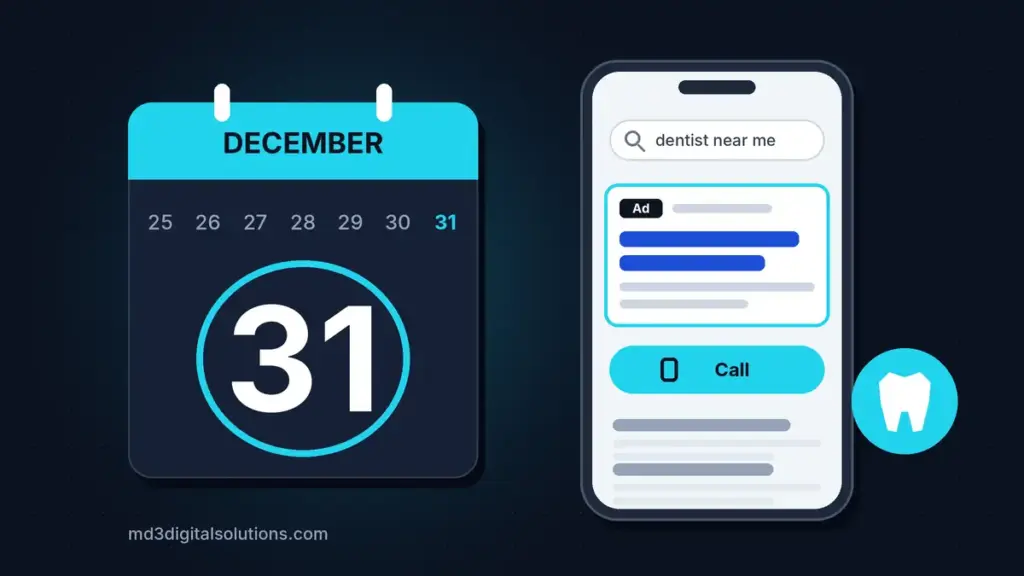
Every December, a certain kind of patient starts searching. They have dental insurance. They haven’t used much of it this year. Maybe there’s a crown their last dentist recommended back in March, or a cleaning they kept putting off. And they’ve just remembered that their plan might reset on January 1.
Those people are typing “dentist near me” into Google right now. That’s the whole case for Google Ads for dentists in December: your practice shows up at the top of that search, right when someone is ready to book.
We’re running a year-end campaign like this for a dental practice in South Florida. Here’s why the timing works, and what we learned that most “December dental marketing” articles skip.
Many dental plans run on the calendar year. Whatever annual maximum a patient didn’t use by December 31 usually doesn’t carry over. That’s a real deadline. People act on deadlines.
Not every plan works this way, though. Some renew on a different date. That’s why every ad we write says benefits may reset and asks people to check their plan.
Search ads fit this moment better than most marketing. You aren’t interrupting anyone. You’re answering someone who’s already looking for a dentist, and you only pay when they click.
This one surprised us. We built an ad group around phrases like “use dental insurance before year end” and “dental benefits expiring.” In the first week those phrases got zero clicks, and Google marked two of them “rarely served.” A couple of weeks later, the same group spent $86.86 in seven days without bringing in a single call or appointment request.
Plain searches like “dentist near me” and “dental fillings” kept producing calls the whole time. So target the searches people actually make, and put the year-end message in the ad. A headline like “Benefits May Reset Jan 1” does the work. The keyword doesn’t have to.
Crowns and fillings fit best. People commonly use their benefits on them, and treatment can start quickly. Clear aligners and smile makeovers are great cases, but patients take longer to decide.
We split the budget in two. One campaign goes after new patients, emergencies and walk-ins included. The other goes after higher-value treatments.
Dental ads fall under Google’s health advertising rules. In the first few days, Google flagged several of our keywords, including “emergency dentist near me” and “dentist accepting new patients.” It never said why. Our fix: add keywords in small batches, see which ones get flagged, and delete those.
Two more rules we follow on every dental account:
A click that lands on a page with no phone button is wasted money. Every page we send ad traffic to gets a tap-to-call button and a short form near the top, plus one plain line: “Benefits and renewal dates vary by insurance plan.”
Keep that form short. Name and phone, maybe a preferred day. No health details. Patient information should never end up in Google Ads or analytics.
A lead that comes in on December 29 is almost useless, because the visit has to happen before the year ends. The campaign should be running by mid-November, with the heaviest push in the first two weeks of December.
Speed matters after the click, too. If a patient fills out your form at 9 p.m. and nobody calls back for two days, they’ve probably booked somewhere else.
The cheapest December appointments often come from your own patient list. Anyone with an unfinished treatment plan or an overdue cleaning is worth a quick call or text. Check your consent and privacy rules first. Ads find new people. Your list fills the gaps.
Here’s one real week, November 9 to 16. The two campaigns cost $393.59 and brought 188 clicks to the practice’s website. Google counted 11 conversions, meaning a call from an ad or an appointment request. That’s about $36 each. Google also tracked 18 calls from people tapping the call button on their phones.
For comparison, the industry reports we used for planning put the average dental cost per lead somewhere between about $73 and $116.
Now the honest part. A conversion isn’t a booked patient. Only the front desk knows how many of those calls became appointments, which is why we ask the office to write down how every new patient found them. One week is a small sample, too. Your numbers will depend on where you are and how crowded your market is.
Not if you move this week. Google reviews new ads before they run, so plan on a few days, not a few hours.
Before you spend anything, check two things. Do you have open appointments in December? And what are your holiday hours? If the schedule is already full, ads will only bring calls you can’t take. Save the budget for January instead, when patients start a fresh year of benefits.
How much should a dental practice spend on Google Ads in December?
The campaign in this article runs on $1,500 a month, split between two campaigns. That’s enough to learn what works in a local market without spreading the budget too thin. Bigger cities cost more per click, and so do pricier treatments like implants.
Do all dental benefits reset on January 1?
No. Many plans follow the calendar year, but some don’t. Your ads and your website should tell patients to check their own plan.
Should we run ads in Spanish too?
If your patients speak Spanish, yes. In South Florida, a separate Spanish ad group with its own landing page reaches people your English ads miss. Have a native speaker review the copy first.
Can you set this up for our practice?
Yes. MD3 Digital Solutions Inc. builds and manages Google Ads campaigns for dental and medical spa practices, including conversion tracking and landing pages. Email [email protected] or call 786-757-4345.
AI assistant — answers may be inaccurate.